
Chances are, you’ve already heard an AI voice this week—maybe in a YouTube video without a human narrator or during a customer support call answered immediately by an automated system. All of this is made possible by a leading AI voiceover tool. Here’s what you should know about how it works and why it’s become so popular.
The Basic Idea Behind AI Voice Generator
How It Converts Text Into Speech
An AI voice generator transforms written text into speech that sounds convincingly natural rather than robotic. It analyzes your script and automatically manages the pacing, pauses, pitch changes, and emotional expression, creating audio that closely resembles real human speech.
How Deep Learning Makes AI Voices Possible
Neural networks are trained on thousands of hours of real human speech, allowing them to learn not just the sounds of language, but also its rhythm and flow. They pick up on where to place emphasis, how pitch rises when asking a question, and even the subtle shifts in breathing between sentences. According to IBM, deep learning and neural networks form the core of every modern AI voice system.
How It Differs From Old Text-to-Speech Technology
Older text-to-speech systems pieced together pre-recorded fragments of speech, making them easy to recognize as artificial. Today’s technology is so advanced that 71 percent of listeners can’t reliably distinguish between an AI-generated voice and a real human voice.
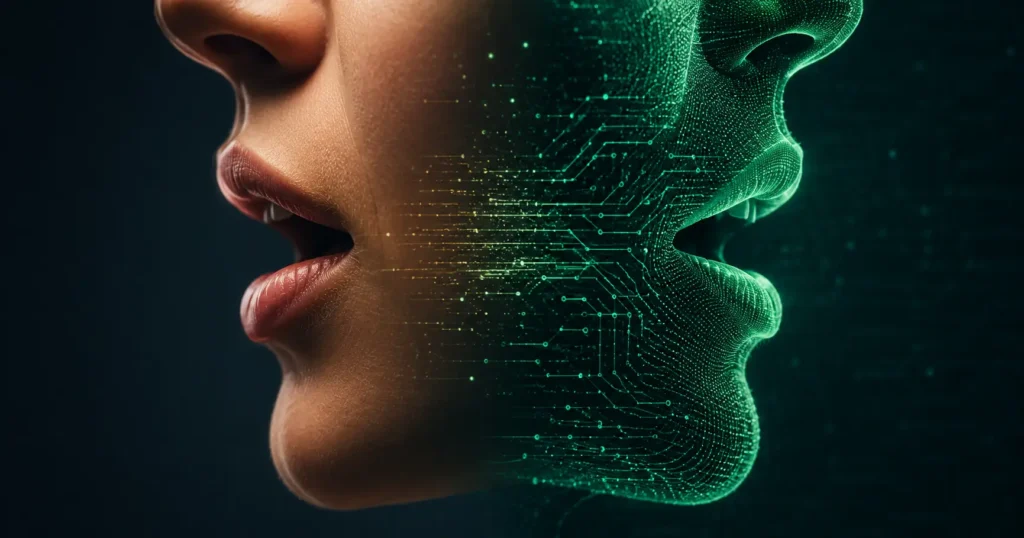
What Can You Actually Do With One?
Voiceovers for Videos and Podcasts
Anyone can now create professional-sounding narration without needing access to a recording studio. With today’s technology, it’s possible to turn a simple script into a natural, lifelike voiceover in just minutes.
Dubbing and Multilingual Content
AI voice generators can translate audio or video content into different languages while preserving the original speaker’s tone and timing. Leading platforms support anywhere from 29 to over 100 languages, depending on the model.
Real-Time Voice Applications
AI voices are now used in customer service bots, navigation systems, and video game characters.
Key Features That Make AI Voices Sound Human
Emotion and Tone Control
What sets a truly convincing AI voice apart from a robotic one is its ability to convey emotion. The way you craft your script—punctuation, sentence length, and word choice—serves as an emotional guide, directly shaping how the AI delivers each line.
Voice Cloning
A brief audio sample is all an AI system needs to create a model that can mimic that voice reading any text. Reputable platforms require explicit consent before cloning a voice, as doing so without permission can lead to serious legal consequences.
Accent and Language Support
Top AI voice platforms now offer support for a diverse range of accents in addition to standard language codes.
Using the API to Integrate AI Voice Into Your Own Projects
What the API Actually Does
An API allows developers to easily integrate an AI voice generator into their own software, eliminating the need to build voice technology from scratch. You simply send in your text, and the system returns synthesized speech—quickly and at scale.
How Developers Connect and Send Requests
The typical process starts by creating an account and generating a secure API key. Once that’s set up, you send a request with your text, voice ID, and chosen model. The best APIs now support both HTTP and WebSocket endpoints, enabling real-time streaming.
Who Uses AI Voice Generators?
- Content Creators
- Businesses
- Developers
- Marketing Teams
- YouTubers

Digital Marketer, SEO Enthusiast
Authored by Abu Talha, who founded Sembron.com and enjoys diving into the world of SEO, software, and AI technologies.